Subterranean termite treatment requires a methodical approach that addresses insect biology and soil conditions rather than indiscriminate chemical spraying. In Columbia, high ambient humidity and damp red clay soils…
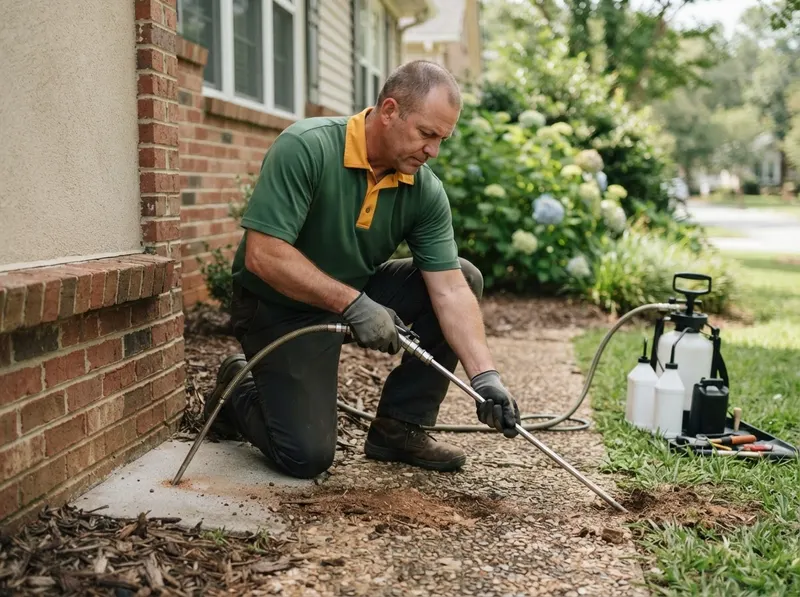
Subterranean termite treatment requires a methodical approach that addresses insect biology and soil conditions rather than indiscriminate chemical spraying. In Columbia, high ambient humidity and damp red clay soils near waterways like the Congaree River create an ideal habitat for subterranean colonies, which travel through moisture-retaining mud tubes to feed on structural timbers. BrightOak Pest Elimination applies non-repellent liquid termiticides such as fipronil alongside targeted cellulose monitoring systems. Because worker termites cannot detect these modern non-repellent materials, they walk directly through treated zones, transferring the active ingredient back to the central nest via mutual grooming and food sharing. This process halts structural feeding within days and leads to complete colony collapse within 60 to 90 days.
Treatment applications vary based on home architecture throughout historical and established Columbia neighborhoods. Properties in Earlewood, Cottontown, and Elmwood Park often feature raised brick piers and unfinished crawlspaces. These configurations require internal perimeter trenching along foundation footings and targeted wood treatments using low-toxicity borate solutions directly on sill plates and floor joists. Conversely, slab-on-grade homes in Rosewood or newer developments in Forest Acres demand sub-slab injection, drilling small holes through adjoining patios or garage aprons every 12 inches to establish an uninterrupted chemical envelope. If a homeowner has an accessible perimeter, exterior trenching provides immediate continuous coverage; if extensive hardscaping surrounds the foundation, hexaflumuron or noviflumuron baiting stations offer a non-invasive alternative that avoids concrete alteration.
Subterranean termite remediation involves three direct steps: 1. A physical visual assessment that measures total linear footage, checks crawlspace moisture levels, and maps active mud tubes; 2. The application phase, where soil trenches measuring 6 inches wide by 6 inches deep receive 4 gallons of mixed solution per 10 linear feet, accompanied by pressure-rodding down to the foundation footing; 3. Long-term monitoring, involving annual re-inspections to ensure landscape grading, mulch additions, or plumbing leaks have not broken the protective barrier. Homeowners worried about indoor air quality, companion animals, or young children can rest assured that once liquid applications bind tightly to soil organic matter and dry, they remain non-volatile and stay confined to subterranean depths away from living spaces.
Every job gets a firm, written price after a free on-site visit.
Tell us about your subterranean termite treatment job in columbia and we'll send a clear, written quote, usually the same day.
 BrightOak Pest Elimination