Rodent exclusion and abatement addresses structural vulnerabilities and biological hazards simultaneously. Roof rats frequently target the oak canopies in Shandon and Heathwood, using overhanging branches to access…
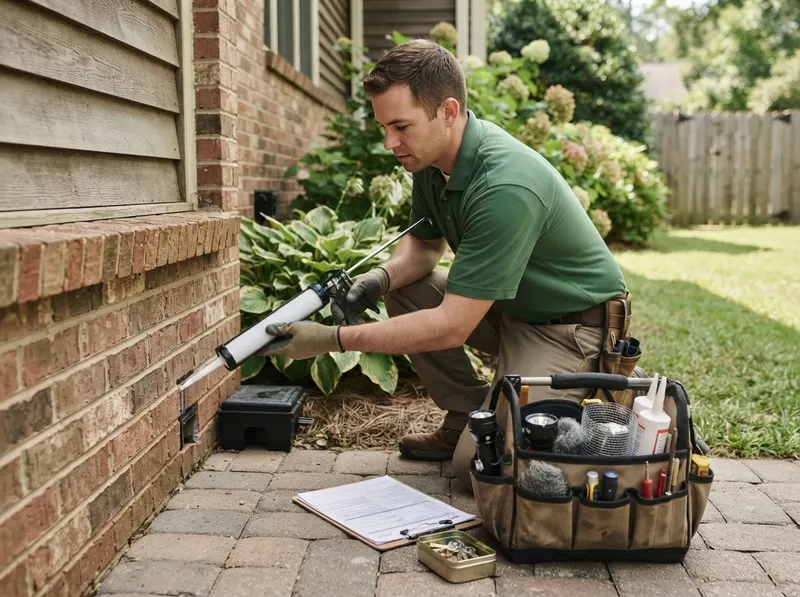
Rodent exclusion and abatement addresses structural vulnerabilities and biological hazards simultaneously. Roof rats frequently target the oak canopies in Shandon and Heathwood, using overhanging branches to access fascia boards, ridge vents, and soffits. In historic neighborhoods like Cottontown, Elmwood Park, and Earlewood, century-old crawl spaces, brick foundation weep holes, and unsealed utility chases provide direct pathways for Norway rats and mice. Grounded exclusion stops these intrusions permanently by sealing entry points larger than 1/4 inch with 19-gauge galvanized hardware cloth, copper mesh, and elastomeric silicone sealants. This physical barrier approach follows integrated pest management protocols recognized by the US EPA Integrated Pest Management program, protecting building envelopes without broadcast exterior chemical dousing.
Abatement protocols isolate rodents already inside using mechanical snap traps and multi-catch stations placed along mapped runways. Rodents cause documented wire-chewing hazards; according to the National Fire Protection Association, gnawed electrical wiring represents a verifiable residential fire ignition risk. Our technicians identify gnaw marks on PVC plumbing lines and electrical wire jacketing in crawl spaces near Rosewood and The Vista. Trapping cycles typically run 7 to 14 days, checked on scheduled intervals until zero activity is recorded. For residential structures near water features such as Lake Katherine or urban drainage basins managed by City of Columbia Public Works, moisture-driven rodent pressure requires targeted exterior monitoring stations securely anchored to prevent interference by pets or non-target wildlife, aligned with wildlife management principles from the South Carolina Department of Natural Resources.
Contaminated attics and crawl spaces carry health risks that require controlled cleanups. The Centers for Disease Control and Prevention outlines strict sanitation procedures for rodent droppings and nesting materials to prevent airborne pathogens like hantavirus and lymphocytic choriomeningitis. Technician protocols utilize HEPA-filtered vacuums compliant with the EPA HEPA standards and atomized botanical disinfectants that neutralize viral contaminants on joists and insulation. All waste disposal is executed in compliance with South Carolina Department of Health and Environmental Control standards. Technicians working within tight crawl spaces or attics adhere to fall and respiratory protection guidelines established by Occupational Safety and Health Administration.
Selecting between exclusion sealing and broadcast perimeter baiting involves distinct operational trade-offs. Chemical exterior bait stations suppress external rodent population spikes around Forest Acres perimeters, yet exterior baiting alone leaves wall voids vulnerable if structural gaps remain open. Physical exclusion permanently closes the structure against future migration waves, though it requires an upfront investment in structural repairs, material carpentry, and crawl space access door reconstruction. Where building materials meet soil in humid Richland County environments, standard building codes detailed by the International Code Council mandate corrosion-resistant flashing to maintain both pest exclusion and moisture defense. BrightOak Pest Elimination prioritizes physical repair over recurring chemical dependency, aligning with standards supported by the National Pest Management Association.
Every job gets a firm, written price after a free on-site visit.
Tell us about your rodent exclusion and abatement job in columbia and we'll send a clear, written quote, usually the same day.
 BrightOak Pest Elimination