Excessive moisture in raised foundations creates optimal harborage for subterranean termites, wood-boring beetles, and American cockroaches across Richland County. Traditional vented foundations in neighborhoods like…
Excessive moisture in raised foundations creates optimal harborage for subterranean termites, wood-boring beetles, and American cockroaches across Richland County. Traditional vented foundations in neighborhoods like Shandon, Rosewood, and Cottontown draw in warm, moisture-laden outdoor air during midlands summers. When this humid air encounters cooler subfloor surfaces beneath air-conditioned living spaces, moisture condenses directly onto joists and subflooring. Maintaining subfloor relative humidity below 60% prevents fungal growth and stops structural degradation, following recommendations outlined by the EPA Indoor Environments Division. Unsealed foundation dirt allows upward moisture vapor evaporation, which drives up interior relative humidity and weakens structural floor frames.
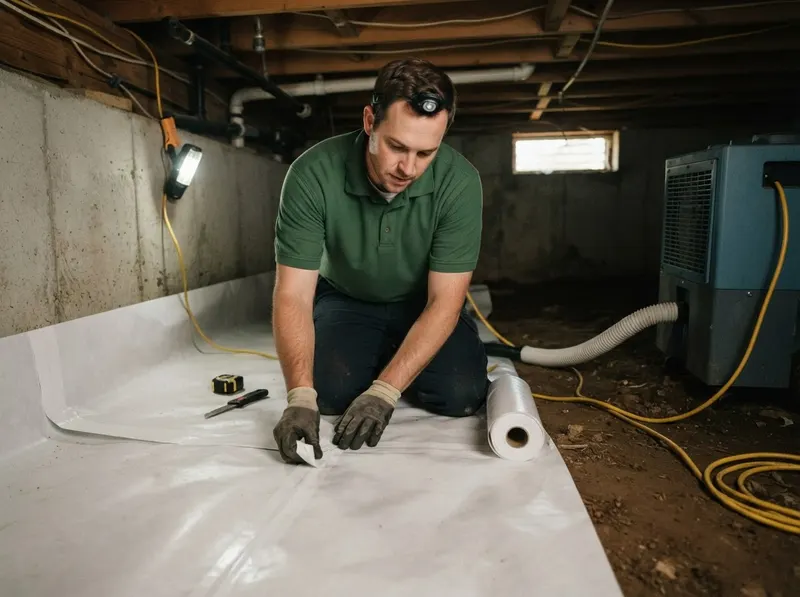
Installing an engineered vapor barrier directly onto the dirt floor establishes a continuous barrier against capillary moisture rise. According to standards established by the Building Science Corporation, covering unpaved crawlspace surfaces stops ground evaporation from entering building assemblies. Heavyweight 10-mil to 20-mil extruded polyethylene sheets are overlapped by at least 12 inches and permanently sealed at seams using marine-grade acrylic vapor tape, conforming to guidelines from the ASTM International standard E1745 for plastic water vapor retarders. Around foundation piers, plumbing risers, and perimeter masonry walls, materials are mechanically fastened and bonded. This continuous ground coverage removes the high-humidity environment favored by wood-destroying organisms without requiring indiscriminate perimeter pesticide drenches.
Mechanical dehumidification manages ambient humidity inside closed foundations. High-capacity, energy-efficient crawlspace dehumidifiers regulated under standards from the ENERGY STAR Program extract between 70 and 120 pints of water per day while draining condensate directly to exterior discharge lines. According to the Clemson University Extension Pest Management Program, wood moisture levels that consistently exceed 20% dramatically increase the probability of wood decay and structural pest infestation. Monitoring wood moisture content using pin-type resistance meters ensures structural timbers remain well below that critical threshold. To safeguard air distribution systems installed within foundation cavities, operational parameters align with duct design criteria published by the Air Conditioning Contractors of America and combustion safety standards enforced by the National Fire Protection Association.
Homes located near water features or flood basins, such as Lake Katherine or properties downhill near the Congaree River basin, experience higher hydrostatic soil pressures and seasonal moisture spikes. In historic districts like Earlewood and Elmwood Park, crawlspaces often lack adequate clearance or feature porous brick-and-mortar foundation piers that require meticulous hand-sealing. Addressing moisture directly addresses the root driver of insect invasion: subterranean termites documented by the USDA Forest Service rely entirely on elevated ambient humidity to prevent desiccation when foraging above subterranean soil lines. Pairing sealed ground barriers with targeted structural exclusion provides durable, non-chemical habitat disruption that protects household safety without persistent pesticide exposure.
Every job gets a firm, written price after a free on-site visit.
Tell us about your crawlspace vapor barrier and dehumidification job in columbia and we'll send a clear, written quote, usually the same day.
 BrightOak Pest Elimination