Residential stinging insect nest removal addresses critical household safety concerns, specifically preventing venomous defensive reactions that disrupt home life. In older architectural framing throughout Shandon,…
Residential stinging insect nest removal addresses critical household safety concerns, specifically preventing venomous defensive reactions that disrupt home life. In older architectural framing throughout Shandon, Earlewood, and Cottontown, paper wasps build open-comb hexagonal nests beneath deep wrap-around porch overhangs and decorative dental molding. Ground-nesting yellowjackets exploit moist, loamy soil near foundational landscaping in Rosewood and Lake Katherine, creating concealed entry burrows that house between 1,000 and 4,000 defensive workers by late summer. The protocol eliminates risks associated with store-bought aerosol sprays, which often trigger mass defensive swarming without penetrating the central nursery combs. Guidance provided by the Clemson Cooperative Extension notes that colony populations peak during August and September across the Midlands, increasing defensive territory perimeters to roughly 20 feet around an active nest entrance.
Technicians follow rigid structural standards established by the National Pest Management Association to address insect pressure without flooding indoor spaces with unnecessary chemical residues. In historic Elmwood Park and Heathwood properties, European hornets frequently establish colonies inside double-hung window weight pockets, unsealed attic louvers, and crawl space access panels. Work begins with a thermal perimeter scan to map the precise cavity borders, followed by micro-injection applications formulated to protect household pets and young children. Technicians monitor active flight tracks near landmarks like the South Carolina State House and Finlay Park to distinguish docile pollinators from high-risk wasps, following conservation parameters outlined by the Pollinator Partnership. Once insect activity ceases, technicians mechanically scrape nesting materials, scrub territorial pheromones from wooden fascia, and seal access cracks using heavy metal flashing and copper mesh.
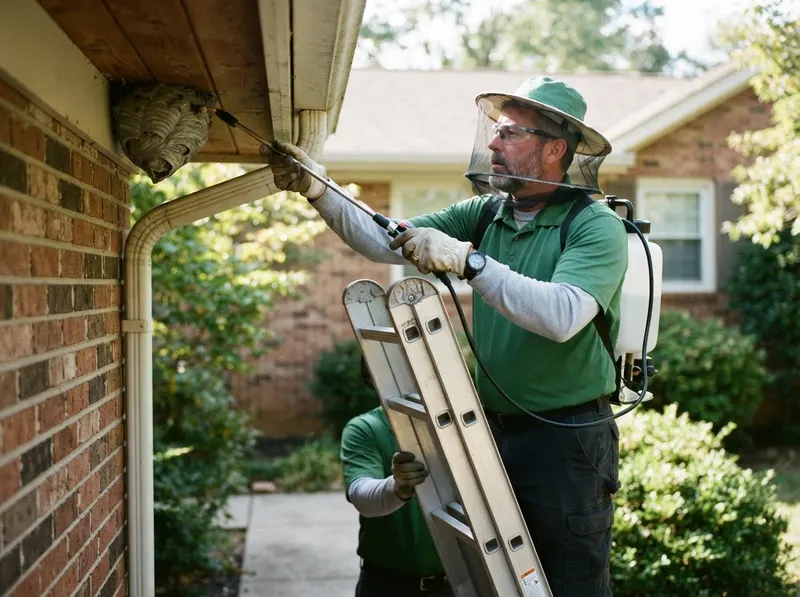
Structural protection prioritizes physical exclusion rather than repetitive chemical applications. When bald-faced hornet paper envelopes expand inside the dense sweetgum and live oak canopies common to Forest Acres, specialized pole-injection gear delivers targeted botanical compounds directly into the lower ventilation port. Technicians adhere strictly to Occupational Safety and Health Administration protocols regarding elevated ladder safety, utilizing specialized protective suits tested against high-pressure sting penetrations. Safe structural integration prevents toxic indoor drift, following environmental safeguards established by the EPA Pesticide Environmental Stewardship initiative and pesticide disposal guidelines managed by the South Carolina Department of Health and Environmental Control. For homes surrounding Williams-Brice Stadium and The Vista, technicians eliminate exterior wall voids so returning foragers cannot reconstruct hives in identical siding crevices.
Homeowners choose specialized eradication when insect populations transition from passive garden foraging to active structural defense. While lone outdoor foragers require simple environmental adjustments, an established colony within twenty feet of doorways, gutters, or play areas demands systematic removal. The service balance trades the minor inconvenience of an on-site ladder setup for the permanent eradication of stinging risks, reinforced by physical barriers that eliminate seasonal recurrence. Technicians cross-reference regional habitat records with the South Carolina Department of Natural Resources to ensure indigenous ecosystem balances remain stable, while coordinating structural moisture remediation based on recommendations from the National Association of Forest Industries and safety clearances detailed by the National Institute for Occupational Safety and Health. Calling (803) 887-7754 connects homeowners directly to practical property evaluations across Richland County.
Every job gets a firm, written price after a free on-site visit.
Tell us about your stinging insect nest removal job in columbia and we'll send a clear, written quote, usually the same day.
 BrightOak Pest Elimination