Nuisance ant infestations across Midlands homes stem primarily from two polygynous species: Tapinoma sessile ( Clemson Cooperative Extension identifies this as the odorous house ant) and Linepithema humile (the…
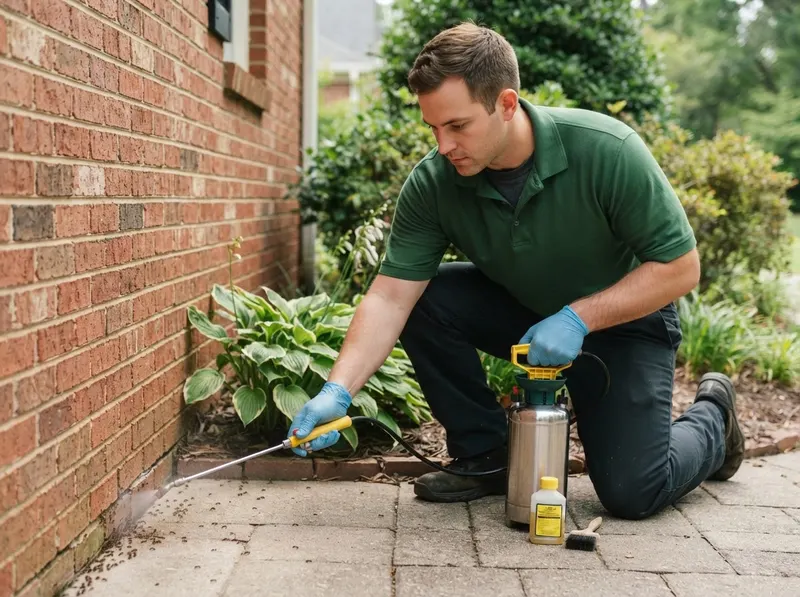
edu/factsheet/ants-inside-the-house/">Clemson Cooperative Extension identifies this as the odorous house ant) and Linepithema humile (the Argentine ant). Unlike solitary outdoor pests, these species establish multi-queen colonies that fragment through a survival process called budding. When a homeowner sprays common over-the-counter pyrethroid chemicals from a retail shelf, the repellent barrier alerts worker ants, triggering the queens to scatter into wall voids and establish three or four distinct satellite nests within 72 hours.
gov/pesticides">EPA, such as indoxacarb or dinotefuran.
The architectural diversity of Columbia directly governs where these nesting networks shelter. In historic neighborhoods like Shandon, Earlewood, Cottontown, and Elmwood Park, early-20th-century homes resting on unencapsulated crawlspaces frequently experience ant traffic along moist subflooring near plumbing stacks.
The shaded canopy along tree-lined streets in Heathwood and Forest Acres allows arboreal colonies to bridge rooflines directly into soffits, while homes in Lake Katherine and Rosewood deal with moisture-driven foraging from high water tables.
Long-term protection relies on physical defense rather than perpetual chemical dependency. edu/public-service/regulatory/pesticide-regulation/">Department of Pesticide Regulation, pairing targeted micro-injections at sub-slab entry points with direct mechanical sealing.
org/">ASTM International standards.
Homeowners evaluate two mechanical approaches when addressing active trails. Single-point surface spot-spraying yields an immediate visual knock-down of visible foragers inside 20 minutes, yet leaves the subterranean queens unaffected, reliably causing nest division into secondary rooms within 14 days.
Conversely, a comprehensive colony eradication protocol deploys slow-acting non-repellent chemistry and perimeter exclusion; this approach requires 5 to 10 days for foraging workers to distribute the lethal dose throughout the subterranean network, achieving genuine elimination of the central nest without trapping occupants in binding quarterly service agreements.
Every job gets a firm, written price after a free on-site visit.
Tell us about your nuisance ant colony eradication job in columbia and we'll send a clear, written quote, usually the same day.
 BrightOak Pest Elimination